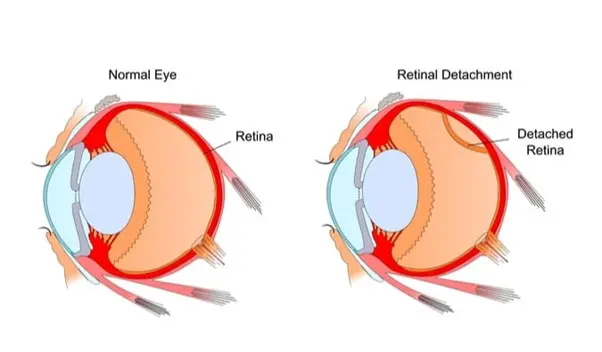
The retina is the light-sensitive layer at the back of the eye responsible for sending visual signals to the brain. When it detaches from its underlying tissue, it’s considered a medical emergency, prompt treatment is the difference between a full recovery and permanent vision loss.
What Is Retinal Detachment
Retinal detachment occurs when the retina pulls away from the back of the eye, cutting it off from its blood supply and oxygen. Left untreated, the affected area of the retina can stop functioning permanently within a matter of days.
Warning Signs to Watch For
Sudden onset of flashes of light, especially in peripheral vision. A sudden increase in floaters, small specks or cobweb-like shapes drifting across your vision. A dark shadow or curtain effect spreading across part of your visual field. Blurred or distorted vision that develops quickly. Any of these symptoms, particularly the shadow or curtain effect, warrant an urgent eye examination, not a wait-and-see approach.
Who Is at Higher Risk
Retinal detachment is more common in people with high myopia (severe nearsightedness), those over 50, anyone who has experienced eye trauma or previous eye surgery, and people with diabetic retinopathy or a family history of retinal detachment.
Treatment Options
Treatment depends on the type and extent of the detachment, but generally falls into a few categories: laser photocoagulation or cryopexy to seal small tears before a full detachment occurs, and surgical repair, such as scleral buckling, pneumatic retinopexy, or vitrectomy, for more advanced detachments. The sooner treatment begins, the better the odds of preserving vision.
Why Urgency Matters
Retinal detachment doesn’t resolve on its own and rarely improves without treatment. If you experience sudden flashes, a rise in floaters, or a shadow across your vision, treat it as an emergency and seek an ophthalmology consultation immediately.